Search Related Sites

Tuesday, October 30, 2012

Natural Disasters Today - Is God Really Responsible?

Some people believe that God uses natural calamities to discipline humankind. Others reject that notion. Still others do not know what to believe.

But does the Bible teach that God is behind the natural disasters we see today? Not at all! God is not causing the earthquakes, hurricanes, floods, droughts, and volcanic eruptions that are so often in today’s news. He is not using these to bring punishment on certain peoples. To a large extent, these are caused by natural forces that have been operating since the earth’s creation. God’s judgments as described in the Bible are quite different from natural disasters. For one thing, God is selective; he reads the hearts of individuals and destroys only those he deems wicked. (Genesis 18:23-32) Furthermore, God sends warnings first, thereby giving the righteous opportunity to escape.

Natural disasters, on the other hand, strike with little or no warning, and they kill and maim indiscriminately. To some extent, mankind has made such disasters worse by damaging the natural environment and by building in areas prone to earthquakes, floods, and extreme weather.

Not only does the Bible shed light on whether God sends natural disasters to punish mankind today, but it also sheds light on what is behind the suffering that so many experience.


The Scriptures Provide a Pattern

The Bible reveals two fundamental truths about God, whose name is Jehovah. First, He is the Creator and as such has the power and authority to control earth’s natural forces. (Revelation 4:11) Second, his actions are always in harmony with His personality, qualities, and principles. He states at Malachi 3:6: “I am Jehovah; I have not changed.” With these points in mind, consider two events in the past, one involving a flood and another involving a drought. You will see that in Bible history when God used natural forces to execute his judgments, he always provided (1) a warning, (2) a reason, and (3) protection for obedient worshippers.

                     THE FLOOD OF NOAH'S DAY

Warning. Decades before the Flood, Jehovah told Noah: “As for me, here I am bringing the deluge of waters upon the earth to bring to ruin all flesh.” (Genesis 6:17) Noah, “a preacher of righteousness,” warned the people, but they “took no note.”—2 Peter 2:5; Matthew 24:39.

Reason. Jehovah announced: “The end of all flesh has come before me, because the earth is full of violence as a result of them.”—Genesis 6:13.

Protection for obedient worshippers. Jehovah gave Noah detailed instructions regarding the making of an ark for survival of the Flood. “Noah and those who were with him in the ark kept on surviving.”—Genesis 7:23.

                         DROUGHT IN ISRAEL

Warning. Before Jehovah God brought a severe drought on Israel, his prophet Elijah announced: “There will occur during these years neither dew nor rain, except at the order of [God’s] word!”—1 Kings 17:1.

Reason. Israel’s worship of the false god Baal prompted Jehovah’s action. In explanation, Elijah stated: “You men have left the commandments of Jehovah, and you went following the Baals.”—1 Kings 18:18.

Protection for obedient worshippers. Jehovah provided food for obedient worshippers during the drought.—1 Kings 17:6, 14; 18:4; 19:18.


What the Pattern Reveals

Today there is no evidence that natural disasters are part of a master plan to punish mankind. As a God of justice, Jehovah has never ‘swept away the righteous with the wicked.’ (Genesis 18:23, 25) He made provision for those who were obedient to him. Today natural disasters afflict men, women, and children indiscriminately.

Clearly, current natural disasters do not fit the pattern of divine intervention found in the Scriptures. What is more, these random events are out of harmony with God’s personality. James 1:13 states that God does not try people with evil things, and 1 John 4:8 sums up God’s character in these words: “God is love.” He could never be responsible for the misery inflicted on innocent people by random storms, earthquakes, and similar tragedies. Will such disasters ever end?


The Suffering Will End

Jehovah God never intended for humankind to be plagued by natural disasters. His will is for humans to live forever in peaceful conditions on earth. As he did in Noah’s day, he will intervene in earth’s affairs to remove badness. True to form, Jehovah God is providing advance notice by having a message of warning declared worldwide, thus allowing people to put themselves in line for survival.—Psalm 37:9, 11, 29; Matthew 24:14.

Sources For This Article:

The Bible’s Viewpoint - Does God Use Natural Disasters to Punish Mankind Today? (g 12/12 pp. 10-11; Watchtower Online Library)

Are Natural Disasters Punishment From God? (w08 5/1 p. 30; Watchtower Online Library; AUDIO/VIDEO at right.)

Is God Responsible? (g 9/07 pp. 4-7; Watchtower Online Library)

Acts of God? (g 11/06 pp. 3-4; Watchtower Online Library) 

Is God Punishing Us? - Natural Disasters—Why So Many? (w11 12/1 pp. 4-5; Watchtower Online Library)

Wednesday, October 24, 2012

Should Christians Celebrate Halloween?

Most people view the celebrations of Halloween as nothing more than harmless fun—an excuse for children and adults to dress up and lose their inhibitions. Some might argue that the origin of Halloween celebrations is of little consequence despite the fact that these celebrations are undeniably pagan in origin. But how should Christians view Halloween if they truly wish to worship and please God as best they can? Would even limited participation in the celebration meet with God's disapproval? The following will assist in determining the answers to these questions.

Halloween's Pagan Origin

"Its name means hallowed or holy evening." - The World Book Encyclopedia, 1952, Vol. 8, pp. 3245-6.

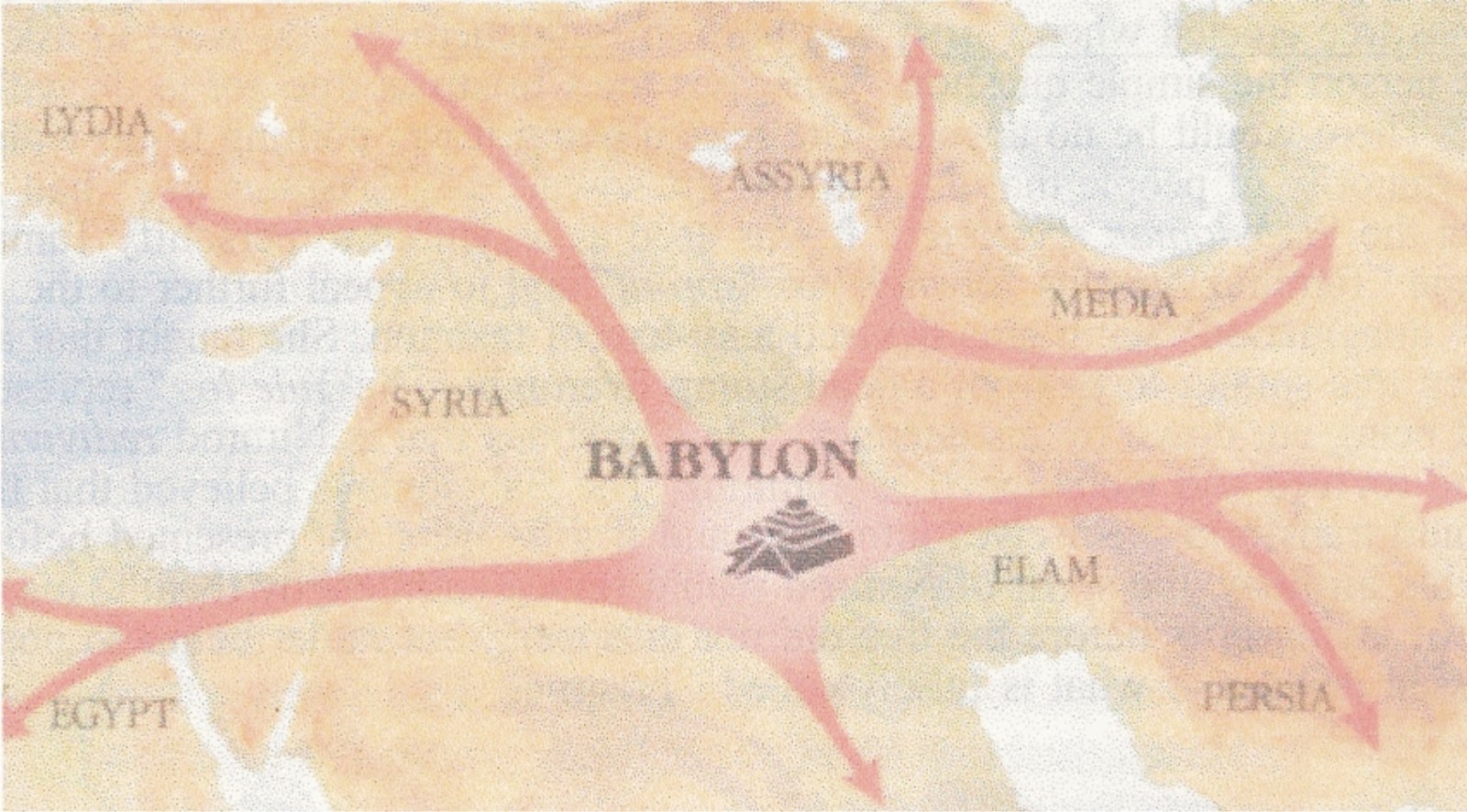
To really understand this "holy evening" you must realize that Halloween, as we know it today, has grown from several different sources. The main source has been traced back to religious ceremonies of the ancient Babylonians. - The New Golden Bough, Sir James Frazer, edited by Dr. T. H. Gaster, p. 468, Mentor Book, 1964; and Funk and Wagnalls Standard Dictionary of Folklore, Mythology, and Legend, 1949, p. 38.

From Babylon, this pagan religious celebration spread throughout much of the world.

The Druids of ancient Britain also borrowed this Babylonian festival and celebrated it to honor Samhain, Lord of the Dead, whose festival fell on November 1. - Halloween Through the Centuries, Linton, p. 4. They believed this pagan god called together "certain wicked souls on Halloween" - Encyclopedia Britannica, 14th ed., Vol. 11, p. 103.

In honoring this pagan god, his supplicators hoped to be protected from these "wicked souls." Therefore, many of the things done in celebrating this "holy evening" are in honor of the false gods of the Druids. For example, "When you light a candle inside the jeering pumpkin face, you are in a small way imitating the Celtic Druids" who lit "great bonfires on hilltops to honor the sun god" and thereby help keep away winter and the evil spirits. - The Book of Holidays, McSpadden, 1958 ed., pp. 149-153; and All About American Holidays, Krythe, 1962, pp. 214-215. Since the "Mother" Church (which was established in Rome about 200 years after the death of the last Apostle) embarked on a course of adopting and adapting pagan religious ceremonies into the Church, it is not surprising that elements of ancient Roman false worship were also added to the "Holy Evening" celebration. For example, "when you duck for apples ... you are doing as the Romans did - - honoring Pomona, the Roman goddess of orchards." - The Book of Holidays, pp. 149-153 and Collier's Encyclopedia, 1975, Vol. 2, p. 192.

Although Halloween poses as a Christian holiday, it is exposed as a pagan feast. One dictionary describes "pagan" as: "One of a people or community observing a polytheistic religion." "Polytheistic" means "the worship of or belief in more than one god." True Christians should consider these things as serious because God views these things very seriously. (Lev. 19:2) God Himself said: "You must not have any other gods against my face. Because I Jehovah your God am a God exacting exclusive devotion." (Ex. 20:1-5) NWT

Yet some may wonder what harm could possibly come from letting children attend a costume party or simply participate in a superficial way. Yes, it is not Scripturally wrong for children to have a costume party or play games such as bobbing for apples. However, doing so as a part of Halloween would be celebrating that pagan religious feast. This would be compromising Christian principles. The Bible condemns the whole idea of putting a Christian mask on a pagan practice.

If pagan ceremonies, customs, god names, etc. are really mixed in with ceremonies, customs, etc. that we use today, they are not merely unacceptable - - - they are detestable to God. We must completely get away from these unclean things and not even "touch" them. (2 Cor. 6:17) Notice how exclusive the worship of God must be: "Be careful to do everything I have said to you. Do not invoke the names of other gods; do not let them be heard on your lips." - Exodus 23:13, NIVSB. Also see: What Does the Bible Really Teach? - Take Your Stand for True Worship from the Watchtower Bible and Tract Society (WBTS).

Halloween and Witchcraft

The real religion celebrated by the "Holy Evening" of Halloween is still a living religion. What is sometimes called "witchcraft" has had its ups and downs but is still practiced as a religion in nearly every country of the world.

"It began in the shadowy darkness of man's early religion. It lived and flourished through the ages and it is by no means wiped out even yet. Witchcraft in the Middle Ages was the `art' of controlling natural forces by power obtained from the Devil. Witches were people who made agreements with the Evil One." - Britannica Jr., 1957 ed., Vol. 15, pp. 131-132.

Whether deluded or not, these "witches" were (and are) making a public declaration: a demonstration of their faith and a defiance of the God of the Bible. They continued to practice their religion (in many different, varying sects) in spite of great persecution. This religion of the Middle Ages actually grew out of the earlier pagan Druid religion.


"These rites did not die .... When a monk or knight swore that in a clearing of the woods he had seen witches dancing around the devil, he did not lie. What he saw was ... people worshiping with a priest of the heathen religion. The prayer meetings of the witches were called witches' Sabbaths. .... Two nights especially were set aside - October 31, called Halloween and the eve of May Day, called Walpurgis." - Britannica Jr., pp. 131-132.

"Though the Church was able to destroy the temples and outward forms of worship of these heathen religions, it could not completely eradicate the faith and beliefs of their priests and worshipers. These found an outlet during the Middle Ages in witchcraft which was devoted to the worship of Satan. This cult included periodic meetings, known as witches' sabbaths, which were given over to feasting and revelry. One of the most important sabbaths was held on Halloween." - Encyclopedia Britannica, 1956, Vol. 11, pp. 106-107.

"The witches' sabbat [sabbath], or Black Mass, was a mockery of the religious one. It began with the assembly of the witches' covens, always at night, in forests, open fields, at crossroads, and even secretly in churches.... The name `sabbats' for these meetings is believed to have come from the Old Hebrew Sabbath - the seventh day." - A Cauldron of Witches, Alderman, 1973, p. 9.

The Bible warns against the practice of spiritism. (Deuteronomy 18:10-12) The apostle Paul wrote: “I do not want you to be participants with demons. You cannot drink the cup of the Lord and the cup of demons.” (1 Corinthians 10:20-22, New International Version) He also asked: “What common interest can there be between goodness and evil? How can light and darkness share life together? How can there be harmony between Christ and the devil? What can a believer have in common with an unbeliever?” (2 Corinthians 6:14-16, Phillips)

While it is true that the vast majority of those who celebrate Halloween would claim to reject Satanic practices, we should, nevertheless, be aware that historically this holiday has close connections with the occult. Therefore, celebrating Halloween can serve as a door leading to spiritism, especially for impressionable youths. Pagan rites and traditions tainted by spiritism simply have no place in Christian worship; they are far from harmless. (Also see: Dabbling in the Occult—What's the Harm? and What You Should Know About Witchcraft from the WBTS.)

Halloween - Based on Unscriptural Beliefs

Finally, Halloween, All Saints’ Day, and All Souls’ Day are all based on the beliefs that the dead suffer or that they can somehow bring harm to the living. However, the Bible clearly shows that such beliefs are not true, saying: “The living are conscious that they will die; but as for the dead, they are conscious of nothing at all.” (Ecclesiastes 9:5) For that reason, the Bible counsels: “All that your hand finds to do, do with your very power, for there is no work nor devising nor knowledge nor wisdom in Sheol [the common grave of mankind], the place to which you are going.” (Ecclesiastes 9:10) Since the dead are unconscious and thus incapable of harming others or suffering themselves, we have nothing to fear from them. At the same time, prayers to help them are of no use whatsoever. But this does not mean that there is no hope for our dead loved ones because the Bible assures us that “there is going to be a resurrection of both the righteous and the unrighteous.” (Acts 24:15) (Also see: The Bible's Viewpoint - What Happens at Death? from the WBTS.)

Should You Celebrate Halloween?

Clearly, God would not approve of any ceremonies or customs that have any pagan associations. The Bible also warns us about the practice of spiritism - of which Halloween historically has close connections with. And finally, Halloween is based on beliefs that run completely contrary to what the Bible teaches. So when it comes to celebrating Halloween - especially after considering what you have just read - what will you decide?  
----------------------------------------------
(More information concerning Halloween can be found in the 10/8/01 issue of the Awake! magazine published by the WBTS.)

Sunday, October 21, 2012

How Does the Governing Body of Jehovah’s Witnesses Today Look to Jehovah God and Jesus Christ For Direction in all Matters?

Neither the Governing Body of Jehovah’s Witnesses nor the Elders in the Christian congregation “dictate policy and theology” [as some have asserted]. Rather, every decision is based on Scriptures as the final authority--or logic in the case of policy.

Jehovah’s Witnesses believe that the Bible is the *final* authority on doctrinal belief and it cannot be overridden by any human or organization (w98 3/15 p.18; km 9/02 p.2; g80 9/22 p.12; it-1 p.1205; g75 10/22 p.22; g70 4/22 p.25).

The authority the Governing Body has is that which is mandated by Holy Scripture (Ac.14:23; Eph.4:11-13; 1Cor.12:18-31; Tit 1:5,9). Anyone who criticizes Jehovah’s Witnesses on this arrangement must also criticize the Apostles, the first century Christians and the Bible itself. Because Jehovah’s Witnesses pattern their organization after that indicated in the Bible

First, a "governing body" of experienced spiritual men oversee the worldwide evangelizing work (Ac.15:2,6,7,22-31; 16:4,5; 8:14; Gal 2:9). Each congregation is taught and organized by a group of spiritual men who are "elders" (PRESBYTER) or "overseers" (EPISKOPOS) and "ministerial servants" (DIAKONOUS) 1Tim.3:1-13; Tit.1:5-9; 1Pt 5:2,3). The True Christian organization would be identified by having this Biblical structure.

Then, following the precedent of the first century Christian Governing Body, the instructions and decisions of the Governing Body are passed on to the congregations by means of written communications and traveling representatives (Ac 16:4). These communications always give a full discussion of the Scriptures on which the decision was based so that all can see the Scriptural basis for the belief.

So, the first century Christian congregations recognized the authority of the Christian governing body at Jerusalem. When the governing body made its decision, as directed by the holy spirit, that decision was accepted and became binding upon all Christian congregations (Ac 15:22- 31).

According to God's Word, the congregation members must be obedient to the "orders" of those "overseers" and "elders," and it required that "all within its fold agree" with expressed Christian beliefs. Those that did not were removed from fellowship (1Thes.4:1,2; 2Thes.3:14; Heb.13:7,17; Php.2:12). Any religion which does not follow these mandates cannot be truly Christian.

"Be obedient to those who are taking the lead among you and be submissive, for they are keeping watch over your souls."

Just as in the first century Christian congregation, the decisions of the Governing Body are not arbitrary but can ALWAYS be double-checked and verified by an examination of the Scriptures.

The authoritative organization serves as the instrument to build faith and maintain Biblical doctrine (Eph.4:11-13; 2Tim.3:16,17). The purpose of headship is to preserve unity and ensure that "all things take place decently and by arrangement" (1Cor.14:40).

There is no JW who believes that the GB has dominion over his faith. Our faith is ours to govern and ours only. Each individual must see to building his faith and proving his beliefs.

By their adhering to Scripture and following Christ as a model the Governing Body can echo Paul's words: "Not that we are the masters over your faith, but we are fellow workers for your joy, for it is by your faith that you are standing" (2Cor.1:24).

Individual Witnesses make decisions on the basis of Bible counsel offered by the Governing Body of their own volition because their personal study of the Bible convinces them that it is the proper course (1Thes.2:13).

When it comes to policy or non-doctrinal decisions the Governing Body observes trends, examines questions and research on Scriptural beliefs, and then passes on decisions based on a united understanding of Bible laws and principles. Thus, Christian experience, guidance from the Bible, and the leadings of Jehovah's spirit direct this organizational body of Christians to theocratic conclusions (1Cor.4:1,2; Tit.1:7-9).

Because of following such theocratic procedures found in accounts like Acts 15 Witnesses have the utmost confidence in their organizational arrangements. And the confirming evidence from the Holy Spirit is undeniable in the unprecedented unity and peace that exists among Jehovah's Witnesses.

So, we do not blindly follow any organization but we recognize those who give evidence of accurate teaching. Witnesses give evidence that they are True Christians by their strictly following Scriptural truth and by their fruitage (Mt.7:16-19; Jn.13:34,35).

SOURCE: This was the answer given by Bar_Anerges to this question on Yahoo Answers.

For more, please see these articles from the Watchtower Bible and Tract Society:

How the Governing Body Differs From a Legal Corporation (w01 1/15 pp. 28-31)

“We Have Come to a Unanimous Accord” (bt chap. 14 pp. 108-115)

Thursday, October 18, 2012

Are We Living in the Last Days?

Jesus' disciples asked Jesus when "the conclusion of the system of things" would take place. (Mt. 24:3)

Jesus said: “Concerning that day and hour nobody knows, neither the angels of the heavens nor the Son, but only the Father.” (Matthew 24:3, 36)

BUT, Jesus did speak of future signs that would mark his presence and the last days:

“Nation will rise against nation, and kingdom against kingdom; and there will be great earthquakes, and in one place after another pestilences and food shortages; and there will be fearful sights and from heaven great signs.” (Luke 21:10, 11)

No one doubts that we are living in unprecedented times. Within one lifetime, one has seen horse-drawn carriages to putting men on the moon. Not one, but two World Wars have been fought and whether it is due to better technology and communications delivering more news from remote locations and/or the fact that there are more people to feel the effects - there has been an increase in reported earthquake activity.

One sign in particular that seems to be the key identifier for this specific time period:

“This good news of the kingdom will be preached in all the inhabited earth for a witness to all the nations; and then the end will come.” (Matthew 24:14)

Jehovah's Witnesses' message is about this kingdom. They are currently preaching about this kingdom in 236 lands:

Jehovah's Witnesses Worldwide Report (Fast Facts-Worldwide; JW.ORG)

...and their magazines, the Watchtower and Awake are the 1st & 2nd most widely distributed magazines in the world:

Watchtower and Awake are the most widely distributed magazines in the world (Search For Bible Truths)

For more, see:

LAST DAYS (WOL; it-2 pp. 205-207)

Are We Living in “the Last Days”? (WOL; bh chap. 9 pp. 86-95 - Bible Teach (bh))

Are We Really Living in “the Last Days”? (WOL; w06 9/15 pp. 4-7)

The Last Days - When? (WOL; g 4/08 pp. 4-7)

More "Last Days" WOL search results

Monday, October 15, 2012

Why Don't Jehovah's Witnesses Celebrate Birthdays?

There are many wholesome occasions that Jehovah's Witnesses participate in or celebrate. But some may wonder why Jehovah's Witnesses do not participate in birthday observances. "What is wrong with birthdays?" they may ask. "After all, there is no specific command in the Bible that condemns birthdays, is there?" Some have even pointed to Job 1:4 as evidence for celebrating birthdays noting that the Scripture seems to show Job’s children celebrating their birthdays. (Yet, upon closer examination of this Scripture, the Hebrew text shows that this does not apply to birthdays. Job himself apparently did not attend and at Job 1:5 Job even prayed for his children saying that they may have "sinned and have cursed God in their hearts.")  

To provide a basis in understanding why Jehovah's Witnesses do not celebrate birthdays, it is important to consider that Jehovah's Witnesses place the highest priority on basing their beliefs, their standards for conduct, and organizational procedures on the Bible. So then, there needs to be an honest examination to Bible references and principles regarding birthdays.
 
 
What the Bible Does and Does Not Say About Birthdays

It is significant that the only two direct references in the Bible to birthday celebrations (Pharaoh of Egypt and Herod Antipas) were remembered for executions and painted in a negative light. (Gen. 40:18-22; 41:13; Mt. 14:6-11; Mark 6:21-28)

"Origen [a writer of the third century C.E.] . . . insists that `of all the holy people in the Scriptures, no one is recorded to have kept a feast or held a great banquet on his birthday. It is only sinners (like Pharaoh and Herod) who make great rejoicings over the day on which they were born into this world below.'" -The Catholic Encyclopedia, 1913, Vol. X, p. 709

It is also significant that the Bible never mentioned that Jesus - the greatest man who ever lived and all Christian's exemplar - ever celebrated his birth, nor did the early Christians. In fact, the attitude was quite the opposite:

Historian Augustus Neander writes: "The notion of a birthday festival was far from the ideas of the Christians of this period." (The History of the Christian Religion and Church, During the Three First Centuries, translated by H. J. Rose, 1848, p. 190)


Birthday Celebrations Were Viewed as Having Pagan Origins

The Bible's direct references to birthdays are helpful in how true Christians should view them. Jehovah's Witnesses also do not celebrate birthdays because popular customs associated with birthday celebrations birthday celebrations were viewed as having pagan origins:

The Jews "regarded birthday celebrations as parts of idolatrous worship . . . , and this probably on account of the idolatrous rites with which they were observed in honor of those who were regarded as the patron gods of the day on which the party was born."-M'Clintock and Strong's Cyclopaedia (1882, Vol. I, p. 817)

"The later Hebrews looked on the celebration of birthdays as a part of idolatrous worship, a view which would be abundantly confirmed by what they saw of the common observances associated with these days."—The Imperial Bible-Dictionary (London, 1874), edited by Patrick Fairbairn, Vol. I, p. 225

“Early Christians [from time of Christ until the 4th century] frowned on [celebrating anyone’s birthday], which was too closely linked with pagan customs to be given the approval of the church.” - How It Started, Garrison, copyright 1972 by Abingdon Press, p. 213

The Christian Book of Why, by Dr. John C. McCollister (Lutheran minister and university professor, graduate of Trinity Lutheran Seminary), Jonathan David Publishers, Inc., 1983, tells us on p. 205:

"Christians of the first century did not celebrate the festival honoring the birth of Jesus - for the same reason they honored no other birthday anniversary. It was the feeling at that time by ALL Christians that the celebration of all birthdays (even the Lordâs) was a custom of the PAGANS. In an effort to divorce themselves from ALL pagan practices, the early Christians refused to set aside a date marking Jesus' birth. As a result, the first celebration of Christmas by Christians did not take place until the fourth century."

The Jews themselves never celebrated birthdays until long after the death of Jesus. They considered it a purely pagan custom and detestable to the God they worshiped. Jesus and his Apostles continued this belief and so did their followers for centuries.

Likewise, just as the early Christians, Jehovah's Witnesses today view these things seriously because they are aware that Jehovah God views these things very seriously. (Lev. 19:2) God Himself said: "You must not have any other gods against my face. Because I Jehovah your God am a God exacting exclusive devotion." (Ex. 20:1-5) NWT

If pagan ceremonies, customs, god names, etc. are really mixed in with ceremonies, customs, etc. that we use today, they are not merely unacceptable - - - they are detestable to God. We must completely get away from these unclean things and not even "touch" them:

"Therefore come out from them and be separate, says the Lord. Touch no unclean thing, and I will receive you." - 2 Cor. 6:17.

Notice how exclusive the worship of God must be: "Be careful to do everything I have said to you. Do not invoke the names of other gods; do not let them be heard on your lips." - Exodus 23:13, NIVSB.


Why Jehovah's Witnesses Celebrate Wedding Anniversaries but not Birthday Anniversaries

Considering the above also explains a common question as to why Jehovah's Witnesses celebrate wedding anniversaries but not birthday anniversaries. This is because there are no pagan origins connected to marriage or wedding rings. Marriage was divinely instituted by the "one true God"...Jehovah. (Genesis 2:18-24; Matthew 19:4-6; John 17:3)

And unlike the mentioned examples of birthday celebrations, the Bible does not put marriage in a bad light. Jesus himself both attended a marriage celebration and contributed to the pleasure of the occasion.—John 2:1-11.
------------------------------------------------------------

To those who are not Jehovah's Witnesses, please remember that if you are looking for the authoritative information on Jehovah's Witnesses' beliefs and practices you should look to the source at http://www.jw.org/en/ .


For more information concerning birthdays found at the Official Website of Jehovah's Witnesses, see:

BIBLICAL LIGHT ON BIRTHDAYS (“God’s Love” chap. 13 pp. 144-159)

Birthday (Insight, Vol.1, p. 319)

Do All Parties Please God? (lr chap. 29 pp. 152-156)

Friday, October 12, 2012

Watchtower And Awake! Magazines Publishing Statistics

Statistics about the Watchtower and Awake! magazines:

THE WATCHTOWER:

The monthly Public Edition has an average print run of about 42,000,000 copies, MAKING IT THE LARGEST CIRCULATION MAGAZINE IN THE WORLD." -Wikipedia; "The Watchtower"; Heading: "Distribution"; par. 2
http://en.wikipedia.org/wiki/The_Watchtower#Distribution

It is published in 195 languages. Since its founding, The Watchtower has not missed a single issue and has enjoyed continuous circulation growth decade-by-decade.

(Read the Watchtower.)
-----------------------------------------------

AWAKE!

"Awake! is considered to be THE SECOND MOST WIDELY DISTRIBUTED MAGAZINE IN THE WORLD (after The Watchtower), with a total worldwide printing of 41,042,000 copies in 84 languages per month."
- Wikipedia; "Awake!" 1st par.

http://en.wikipedia.org/wiki/Awake!


(Read the Awake! magazine.)
---------------------------------------------------

CHART

Click here to see the worldwide list of printed magazines with the total worldwide circulation, sorted by circulation per issue.

Tuesday, October 9, 2012

What is the Coptic Language and Why is it Important?


"The Coptic language was spoken in Egypt in the centuries immediately following Jesus' earthly ministry, and the Sahidic dialect was an early literary form of the language. Regarding the earliest Coptic translations of the Bible, The Anchor Bible Dictionary says: 'Since the [Septuagint} and the [Christian Greek Scriptures] were being translated into Coptic during the 3rd century C.E., the Coptic version is based on [Greek manuscripts] which are significantly older than the vast majority of extant [still-existing] witnesses.'"

[A significant fact concerning the Coptic language is that, unlike the Greek, it used an indefinite article ("a" or "an" in English).

So in NT Greek for example, the literal translation of John 1:6 is, "came to be man having been sent forth ...." But Bible translators always render 'man' here as 'a man.' This is because the Greek did not use any form of an indefinite article, and it had to be understood and supplied by the English translator.]

The Coptic, however, DID use a form of an indefinite article ('a' or 'an' in English).]

"Hence," says the WT article, "the Coptic translation supplies interesting evidence as to how John 1:1 would have been understood back then. What do we find? The Sahidic Coptic translation uses an indefinite article with the word 'god' in the final part of John 1:1 Thus, when rendered into modern English, the translation reads: 'And the Word was a god.'" - Nov. 1, 2008 Watchtower; page 25