Search Related Sites

Sunday, October 27, 2013

Addressing the Question: "Is the Name 'Jehovah' an Invention of the Watchtower Society?"

No, the name “Jehovah” is no more of an invention than the names “Jesus,” “Joshua,” or “Jonathan.” Such a
claim requires others to be extremely ignorant.


And the “Watchtower” hides absolutely nothing regarding the origin of the English pronunciation Jehovah. [The] suggestion [made in this question] is untrue and dishonest as can be seen by just a couple of the many quotes in the Witnesses’ literature:

"In 1278 it appeared in Latin in the work Pugio fidei (Dagger of Faith), by Raymundus Martini, a Spanish monk.

"Raymundus Martini used the spelling Yohoua. Soon after, in 1303, Porchetus de Salvaticis completed a work entitled Victoria Porcheti adversusi impios Hebraeos. In this he, too, mentioned God's name, spelling it variously Iohouah, Iohoua and Ihouah.

"Then, in 1518, Petrus Galatinus published a work entitled De arcanis catholicae veritatis in which he spells God's name Iehoua. The name first appeared in an English Bible in 1530, when William Tyndale published a translation of the first five books of the Bible. In this he included the name of God, usually spelled Iehouah, in several verses, and in a note in this edition he wrote: ‘Iehovah is God's name . . . Moreover as oft as thou seist LORD in great letters it is in Hebrew Iehovah.’" – The Divine Name That Endures Forever, WTB&TS.

Jehovah is an accurate rendering of the Divine Name and did not "originate" with the thirteenth century.

The form "YeHoWaH" is in the earliest vowel pointed Hebrew texts, including the Aleppo Codex and the Codex Leningradensis.

The Catholic Encyclopedia (1913) says:

"Jehovah (Yahweh): The proper name of God in the Old Testament;.... Finally, the word is found even in the "Pugio fidei" of Raymund Martin, a work written about 1270. PROBABLY THE INTRODUCTION OF THE NAME JEHOVAH ANTEDATES EVEN R. MARTIN. No wonder then that this form has been regarded as the true pronunciation of the Divine name by such scholars as Michaelis, Drach, and others."

So the origin of the English pronunciation is rooted in all the ancient languages.

The name Jehovah is NOT an erroneous “invention.” It correctly retains the exact four letters or Tetragrammaton of God’s name in Hebrew.

Then, recent discoveries and studies have given solid evidence that YHWH had to have three syllables, not two! So, Yahoveh/Yehoveh now seems to be the most accurate. In fact, in light of the evidence, in English Jehovah may be as close to the original pronunciation as one could get in translating any name from Hebrew to English or other languages.

(See George Wesley Buchanan; "How God's Name Was Pronounced", Biblical Archaeology Review Mar./Apr. 1995 Volume 21 Number 2; page 30. Harris, Archer, Waltke; "Theological Wordbook of the Old Testament" #484. James Trimm; "Nazarenes and the Name of YHWH" and "In Fame Only?" by Gerard Gertoux)

When we accept the overwhelming evidence for a tri-syllable pronunciation, the acceptable vocalizations vary relatively little in their pronunciation from the sound of "Jehovah." So, it is clear that "Jehovah" does accurately represent the Divine Name.

"Jehovah" can be verified as an accurate rendering for YHWH by examination of theophoric names.

The original Hebrew name for God’s son is a theophoric because it contains the Divine Name. It is written YHWSA. No one knows exactly how it was pronounced but either Yeshua or Yehoshua are acceptable. And even though "Jesus" does not retain the Hebrew pronunciation it is the most recognizable is a perfectly accurate pronunciation.

If you accept "Jesus" as correct, then you have to accept Yeh(o)-/Jeh(o)- as the first part of the Divine Name. Other theophoric names in the Bible support this prefix as well as The Name having three syllables.

Therefore, we can properly render the Hebrew "tetragrammaton" YHWH/JHVH as Yehowah, Yahweh or Jehovah.

Replacing the Divine name with a common title "LORD" is the most blatant of blasphemies and elicits the strongest of condemnation (Rev. 22:18,19). It is imitating Satan, who refused to used that Name, and it is a refusal to imitate Jesus who "made that name known" to all his followers and placed it first, of primary importance, in his model prayer (Jn.17:6,26; Mt.6:9).

God made it clear that Jehovah would be his Eternal Name (Ex. 3:15, Mic. 4:5; Jer.23:27). It was manifestly Christ’s determination to make Jehovah's name known to Christians (Jn. 17:6, 26 (Cf. Jn. 12:28; 17:4, 26; Rev. 1:5).

In the end times True Christians would be associated with the Father’s Name (Acts 15:14; Amos 9:11, 12). Refusal to use some proper form of that Name would therefore be a denial of being truly Christian.

Source: This is an answer given by Bar_Anerges to a question from Yahoo! Answers.

Related Articles:

God's Name - Links to information (Defend Jehovah's Witnesses)

How Was God's Name (YHWH) Pronounced? (Defend Jehovah's Witnesses)

What is God's name? Is it "God", "Lord", or something else? (Defend Jehovah's Witnesses)

"Jehovah" in The New Testament (Category) (Defend Jehovah's Witnesses)

Jehovah - Importance of Name (Defend Jehovah's Witnesses)

The New World Translation and the Restoration of God's Name 237 Times in the New Testament (Defend Jehovah's Witnesses)

Hallelujah / Jah - The Removal of God's Name and Why "Hallelujah" Remained (Defend Jehovah's Witnesses)

Should the name Jehovah not be used because it is said that the letter "J" isn't in Hebrew? (Defend Jehovah's Witnesses)

Tuesday, October 15, 2013

The Creative 'Days' - How Long Was Each 'Day' and Were All 'Days' Uniform in Length?

First, [Jehovah's] Witnesses know that the heavens and earth are many millions (or billions) of years old.

Many "young earth" creationist have mistakenly included the creation of the "heavens and the earth" as part of the six creative days of Genesis. But, in actuality Genesis 1:1 refers to a time *before* the six creative days. The six creative days only refer to the transforming of the earth to make it fit it as a habitation of animals and humans. Millions or billions of years could have transpired between the creation of the earth and the beginning of the creative days.

So, the Genesis account of creation allows for the earth to be billions of years old. (The evidence from our seeing star light which has traveled millions of years is a valid use of proven science and confirms the separation of Genesis 1:1 from the six creative days.)

Witnesses are also united in the belief that the scriptural evidence shows that the “creative days” were not a literal 24 hours. (See: Are Jehovah's Witnesses Creationists?; Defend Jehovah's Witnesses)


Now, regarding the length of time from the first creative day till now, Jehovah's Witnesses' official position is that all the Scriptural evidence logically points to a period of seven thousand years for the length of each creative day. This is not *doctrine* in regard to the length of the first six days, for at the same time our literature has always stated that the length of the first six days are simply an "indication" resulting from logically reasoning on the scant scriptural evidence- -specifically the determinable length of the seventh day.

For instance notice the following Watchtower comments. w73: "...*evidently* seven thousand years long." w70: "[Scripture] gives us a clue...reasonable to conclude...appears to be." w67: "Bible indicates." w61: "was logical." w1912: "a reasonable deduction."

The comment in the 1904 Studies in the Scriptures, vol. 6 is significant: "...the length of these epoch-days is not indicated, we will be justified in assuming that they were uniform periods..."


Unofficially many, like myself, may like the idea that each day could be many millions of years in length, or even of varying lengths. However, the *only* reason for this is because it makes it easier to deal with the chronological dating of modern scientists. If we stick to *only* the evidence from the Scriptures, we only see evidence for the each day to be 7,000 years.

One fact that might argue against a variable length for the creative days is that the "days" are said to be part of a creative "week." The description of a week seems to indicate that each "day"--whatever they may be–would logically be the same length. Thus, Scripturally the most logical and most probable exegetical conclusion would be that each "day" must be equal. Since it is an inferred conclusion the possibility that the days could have been variable in length, perhaps millions of years remain as a possible theory. But, there is no evidence for this in Scripture and so is not taught by Witnesses.

The only piece of evidence we have is that the seventh day is 7,000 years. While meager, the Scriptural evidence is clear: we have a series of "days." They are numbered in relation to each other, 1-7. We know the last one is 7,000 years long. Logic induces us to conclude that the other six are of equal lengths. But, if this conclusion is incorrect, it will only be in the New System that we will gain the knowledge to say for sure.

Until then, we must content ourselves with pointing out that though the length of the first six creative days are not specifically addressed by the Scriptures, the available indication is that they are each 7000 years. If someone wants to favor varying lengths or millions of years for each “day” it is without solid Scriptural support.


Fortunately, our logical conclusions concerning the length of the creative days is not life threatening or necessary to our salvation. (Emphasis mine. -E)

Evidence from sound exegesis clearly proves that the creative days cannot be 24 hours. On the other hand, there is not one shred of solid contextual evidence supporting the view that the creative "days" were 24 hours long.

As "A Religious Encyclopaedia" (vol. I, p. 613) observes: "The days of creation were creative days, stages in the process, but not days of twenty-four hours each."—Edited by P. Schaff, 1894.

"Like Young, this writer believes the days of Gen I to be intentionally patterned, chronological, of indeterminable length."–Theological Wordbook of the O.T.

SOURCE: This is an answer by BAR_ANERGES to a question at Yahoo Answers.

Thursday, October 10, 2013

HALLOWEEN - Does It Have Any Known Pagan Religious Associations?

HALLOWEEN

"Its name means hallowed or holy evening." - The World Book Encyclopedia, 1952, Vol. 8, pp. 3245-6.

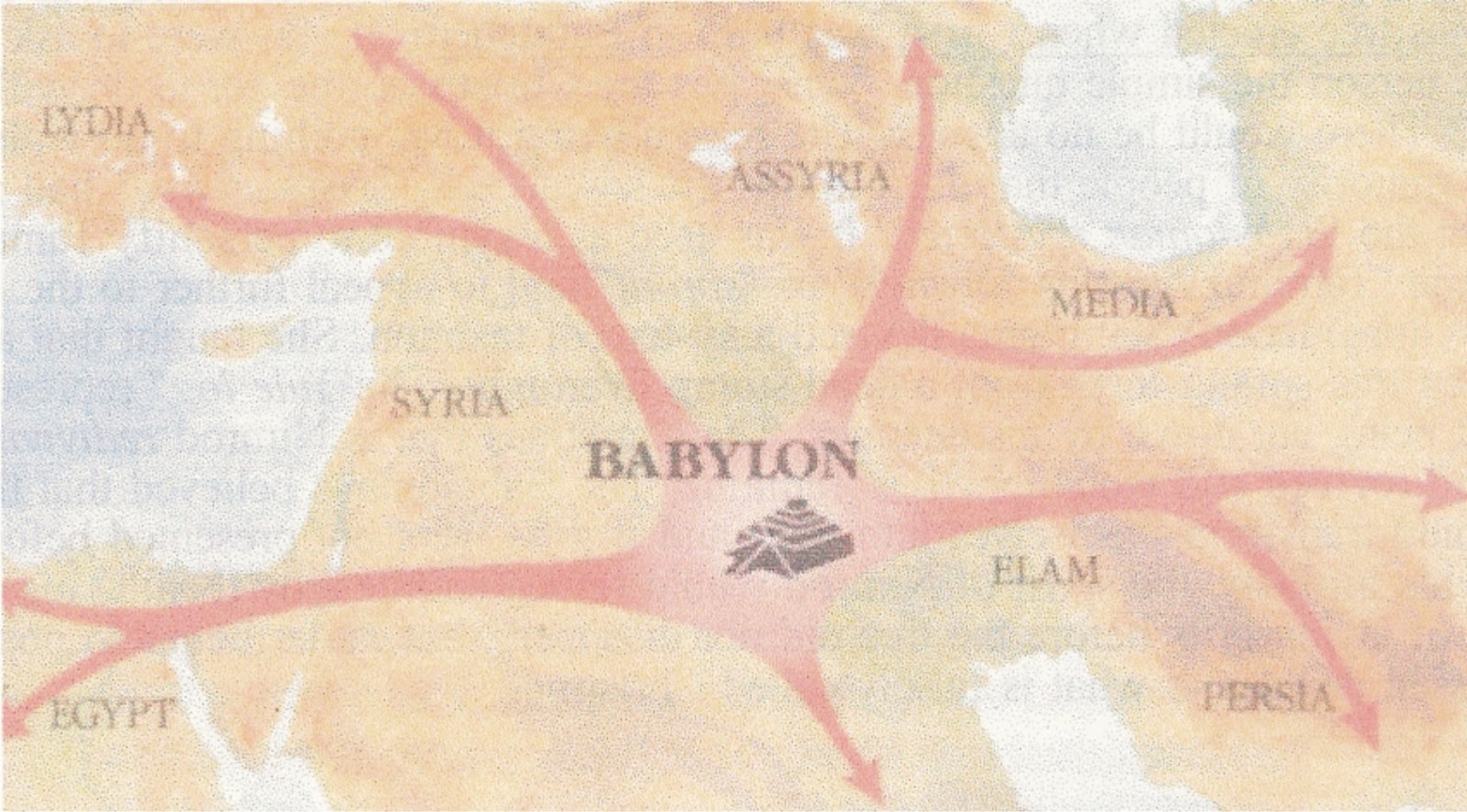
To really understand this "holy evening" you must realize that Halloween, as we know it today, has grown from several different sources. The main source has been traced back to religious ceremonies of the ancient Babylonians. - The New Golden Bough, Sir James Frazer, edited by Dr. T. H. Gaster, p. 468, Mentor Book, 1964; and Funk and Wagnalls Standard Dictionary of Folklore, Mythology, and Legend, 1949, p. 38.

From Babylon, this pagan religious celebration spread throughout much of the world.

The Druids of ancient Britain also borrowed this Babylonian festival and celebrated it to honor Samhain, Lord of the Dead, whose festival fell on November 1. - Halloween Through the Centuries, Linton, p. 4. 

They believed this pagan god called together "certain wicked souls on Halloween" - Encyclopedia Britannica, 14th ed., Vol. 11, p. 103.

In honoring this pagan god, his supplicators hoped to be protected from these "wicked souls." Therefore, many of the things done in celebrating this "holy evening" are in honor of the false gods of the Druids. For example, "When you light a candle inside the jeering pumpkin face, you are in a small way imitating the Celtic Druids" who lit "great bonfires on hilltops to honor the sun god" and thereby help keep away winter and the evil spirits. - The Book of Holidays, McSpadden, 1958 ed., pp. 149-153; and All About American Holidays, Krythe, 1962, pp. 214-215.

Since the "Mother" Church (which was established in Rome about 200 years after the death of the last Apostle) embarked on a course of adopting and adapting pagan religious ceremonies into the Church, it is not surprising that elements of ancient Roman false worship were also added to the "Holy Evening" celebration. For example, "when you duck for apples ... you are doing as the Romans did - - honoring Pomona, the Roman goddess of orchards." - The Book of Holidays, pp. 149-153 and Collier's Encyclopedia, 1975, Vol. 2, p. 192.

Halloween and Witchcraft

The real religion celebrated by the "Holy Evening" of Halloween is still a living religion. What is sometimes called "witchcraft" has had its ups and downs but is still practiced as a religion in nearly every country of the world.

"It began in the shadowy darkness of man's early religion. It lived and flourished through the ages and it is by no means wiped out even yet. Witchcraft in the Middle Ages was the `art' of controlling natural forces by power obtained from the Devil. Witches were people who made agreements with the Evil One." - Britannica Jr., 1957 ed., Vol. 15, pp. 131-132.


Whether deluded or not, these "witches" were (and are) making a public declaration: a demonstration of their faith and a defiance of the God of the Bible. They continued to practice their religion (in many different, varying sects) in spite of great persecution. This religion of the Middle Ages actually grew out of the earlier pagan Druid religion.

"These rites did not die .... When a monk or knight swore that in a clearing of the woods he had seen witches dancing around the devil, he did not lie. What he saw was ... people worshiping with a priest of the heathen religion. The prayer meetings of the witches were called witches' Sabbaths. .... Two nights especially were set aside - October 31, called Halloween and the eve of May Day, called Walpurgis." - Britannica Jr., pp. 131-132.

"Though the Church was able to destroy the temples and outward forms of worship of these heathen religions, it could not completely eradicate the faith and beliefs of their priests and worshipers. These found an outlet during the Middle Ages in witchcraft which was devoted to the worship of Satan. This cult included periodic meetings, known as witches' sabbaths, which were given over to feasting and revelry. One of the most important sabbaths was held on Halloween." - Encyclopedia Britannica, 1956, Vol. 11, pp. 106-107.

"The witches' sabbat [sabbath], or Black Mass, was a mockery of the religious one. It began with the assembly of the witches' covens, always at night, in forests, open fields, at crossroads, and even secretly in churches.... The name `sabbats' for these meetings is believed to have come from the Old Hebrew Sabbath - the seventh day." - A Cauldron of Witches, Alderman, 1973, p. 9.

Halloween - Based on Unscriptural Beliefs

The Bible warns against the practice of spiritism. (Deuteronomy 18:10-12) The apostle Paul wrote: “I do not want you to be participants with demons. You cannot drink the cup of the Lord and the cup of demons.” (1 Corinthians 10:20-22, New International Version) He also asked: “What common interest can there be between goodness and evil? How can light and darkness share life together? How can there be harmony between Christ and the devil? What can a believer have in common with an unbeliever?” (2 Corinthians 6:14-16, Phillips)

While it is true that the vast majority of those who celebrate Halloween would claim to reject Satanic practices, we should, nevertheless, be aware that historically this holiday has close connections with the occult. Therefore, celebrating Halloween can serve as a door leading to spiritism, especially for impressionable youths. Pagan rites and traditions tainted by spiritism simply have no place in Christian worship; they are far from harmless. (Also see: Dabbling in the Occult—What's the Harm? and What You Should Know About Witchcraft from the WBTS.)

Should You Celebrate Halloween?

Clearly, God would not approve of any ceremonies or customs that have any pagan associations. The Bible also warns us about the practice of spiritism - of which Halloween historically has close connections with. And finally, Halloween is based on beliefs that run completely contrary to what the Bible teaches. 

So when it comes to celebrating Halloween - especially after considering what you have just read - what will you decide?  
----------------------------------------------
(For even more specific information concerning Halloween, see:

Halloween - Links to Information
(INDEX; Watchtower Online Library)

The Truth About Halloween (AWAKE! SEPTEMBER 2013; JW.ORG)

The Origins of Halloween—What Does the Bible Say About Them? (JW.ORG)

Popular Celebrations—Harmless Fun?
(g01 10/8 3-10; Watchtower Online Library)

Why I Don’t Celebrate Halloween
(g 10/06 p. 27; Watchtower Online Library)

HALLOWEEN IS FAR FROM HOLY
(lv chap. 13 pp. 144-159; Watchtower Online Library)


Thursday, October 3, 2013

Do Jehovah’s Witnesses Accept Medicine and Medical Treatment?

Yes, Jehovah’s Witnesses accept medicine and medical treatment. While Jehovah’s Witnesses try to take care of their bodies and maintain good health, they sometimes “need a doctor.” (Luke 5:31) In fact, as was the first-century Christian Luke, some of Jehovah’s Witnesses are physicians.—Colossians 4:14.

Some treatments conflict with Bible principles, though, and Jehovah’s Witnesses reject these. For example, Jehovah’s Witnesses don’t accept blood transfusions because the Bible forbids taking in blood to sustain the body. (Acts 15:20) Likewise, the Bible prohibits health treatments or procedures that include occult practices.—Galatians 5:19-21.

However, the vast majority of medical treatments do not conflict with Bible principles. Therefore, personal choice is involved. One Witness might decide to accept a particular medicine or treatment, while another Witness might reject that same treatment.—Galatians 6:5.

SOURCE: Do Jehovah's Witnesses Accept Medical Treatment? (JW.ORG)

For more, see:

Can a Christian Accept Medical Treatment? (JW.ORG)

Why don’t Jehovah’s Witnesses accept blood transfusions? (JW.ORG)

Blood / Blood Transfusions - Links to Information (Defend Jehovah's Witnesses)

Monday, September 23, 2013

John 5:18 "...making himself equal to God"

Some point to the latter part of John 5:18 as proof that Jesus is God. But here is how John 5:18 appears in its entirety:

"For this reason the Jews tried all the harder to kill him; not only was he breaking the Sabbath, but he was even calling God his own Father, making himself equal [ison] with God." - NIV.

The Jews were wrongly accusing Jesus of making himself equal to God in the authority to change the Law.

Jesus had just healed a man on the Sabbath. Jewish tradition had added numerous restrictions to the Sabbath law over the years.

Jesus would certainly not break the Law which was still in effect until his sacrificial death.

So, when the Jews accused him of making himself equal to God (by "breaking" the Sabbath traditions of the Jews and claiming that it was not wrong to heal on the Sabbath), they were insisting that their tradition of not healing on the Sabbath was actually God's will. And, therefore, Jesus' claim that it was lawful to do so was "making himself equal to God" (in this case of healing and "changing" the Law - which would be God's right alone).

It seems reasonably certain that the Jews didn't really believe Jesus was actually claiming to be God but attempting to usurp God's authority in this one respect. But, since these were Jesus' enemies who were making this false charge at John 5:18, it really matters very little what they claimed.

What does matter, however, is what Jesus claimed. How did Jesus answer this false charge by his enemies?

"To this charge Jesus replied, `In truth, in very truth I tell you, the Son can do nothing by himself; he does only what he sees the Father doing....'" - John 5:19, NEB.

So Jesus did not claim that he was Almighty God or even equal to Him. He clearly told the Jews that he was not God, but that, even as God's spokesman, he could not act upon his own initiative. Can we really picture the Almighty God of the universe saying that he could do nothing on his own initiative?

We find, then, that the Jews made a charge, and Jesus refuted it. He never claimed to be God. He never claimed to be equal to God.

For more, see:

John 5:18 ("Equal": Ison) (Examining the Trinity)

What is the meaning of John 5:18? (rs p. 209-p. 220; Watchtower Online Library)

Exposing the False Reasoning Behind Trinity Proof Texts (Examining the Trinity)

Friday, September 13, 2013

Does Revelation 14:10, 11 Really Prove the Existence of a Fiery Hell?

Some point to Revelation 14:10, 11 as proof of the existence of a fiery Hell. It reads:

"He will also drink of the wine of the anger of God that is poured out undiluted into the cup of his wrath, and he shall be tormented with fire and sulphur in the sight of the holy angels and in the sight of the Lamb. And the smoke of their torment ascends forever and ever, and day and night they have no rest, those who worship the wild beast and its image, and whoever receives the mark of its name." - NWT

But is Rev. 14:10, 11 really proof of the existence of a fiery Hell?

First, it is clear that the book of Revelation is a book full of symbols and of figurative (not literal) language. So when the rest of the Bible clearly shows how when someone dies, they are not conscious of anything (Ps. 146:4; Ecclesiastes 9:5) and that the condition of the dead is one of inactivity - likened to a deep sleep (Ps. 13:3; John 11:11-14; Acts 7:60; 1 Cor. 7:39; 15:51; 1 Thess. 4:13), it would seem reasonable to conclude that what was written at Rev. 14:10, 11 is indeed phrased in figurative or symbolic terms. (Also see: A Closer Look at Some Myths About Death w02 p. 5-86/1 p; Watchtower Online Library)

(Also, it is important to note that it is the SMOKE that ascends forever...NOT the "torment".)

Below is a small excerpt from the WBTS publication Revelation - It's Grand Climax at Hand. It provides an excellent examination of the use of the words "fire and brimstone" and how some can be "tormented with fire and sulphur":

Some have viewed the mention here (Rev. 14:10b, 11) of fire and sulfur ("fire and brimstone," King James Version) as a proof of the existence of a hellfire. But a brief look at a similar prophecy shows the real import of these words in this context. Back in the days of Isaiah, Jehovah warned the nation of Edom that they would be punished because of their enmity toward Israel. He said: "Her torrents must be changed into pitch, and her dust into sulphur, and her land must become as burning pitch. By night or by day it will not be extinguished; to time indefinite its smoke will keep ascending. From generation to generation she will be parched; forever and ever no one will be passing across her."—Isaiah 34:9, 10.

Was Edom hurled into some mythical hellfire to burn forever? Of course not. Rather, the nation completely disappeared from the world scene as if she had been totally consumed with fire and sulfur. The final result of the punishment was not everlasting torment but "emptiness . . . wasteness . . . nothing." (Isaiah 34:11, 12) The smoke `ascending to time indefinite' vividly illustrates this. When a house burns down, smoke keeps coming from the ashes for some time after the flames have died down, providing onlookers with evidence that there has been a destructive conflagration. Even today God's people remember the lesson to be learned from the destruction of Edom. In this way `the smoke of her burning' is still ascending in a symbolic way.

Those who have the mark of the wild beast will also be destroyed completely, as if by fire. As the prophecy later reveals, their dead bodies will be left unburied for animals and birds to eat. (Revelation 19:17, 18) So, clearly, they are not being literally tortured forever! How are they "tormented with fire and sulphur"? In that the proclamation of truth exposes them and warns them of God's coming judgment. Therefore they vilify God's people and, where possible, slyly persuade the political wild beast to persecute and even kill Jehovah's Witnesses. As a climax, these opposers will be destroyed as with fire and brimstone. Then "the smoke of their torment ascends forever and ever" in that God's judgment of them will serve as a touchstone if ever again Jehovah's rightful sovereignty is challenged. That issue will have been settled for all eternity. - Revelation - It's Grand Climax at Hand, Chapter 30 "Babylon the Great Has Fallen!", par. 14-17

Also see:

The Biblical Hell (Jehovah's Witnesses United)

What Really Is Hell? (w02 7/15 pp. 5-7; Watchtower Online Library)

Hell - Links to Information (Search For Bible Truths)

Monday, September 9, 2013

Why is Jesus called "Mighty God" at Isa. 9:6?

"For unto us a child is born, unto us a son is given; and the government shall be upon his shoulder; and his name shall be called Wonderful Counsellor, Mighty God, Eternal Father, Prince of Peace." (Isa. 9:6) 

Pretty much all Christians accept this son as being the Christ.  Some will tell you that since the meaning of this symbolic name includes the words "Mighty God, Eternal Father," then Jesus is the Mighty God and the Eternal Father.

But there are at least two other ways this personal name has been interpreted by reputable Bible scholars. (1) The titles found within the name (e.g., "Mighty God") are intended in their secondary, subordinate senses. (2) the titles within the name are meant to praise God the Father, not the Messiah.

First, (1) there is the possibility that the words (or titles) found in the literal meaning of the name apply directly to the Messiah all right but in a subordinate sense.  In other words, Christ is "a mighty god" in the same sense that God's angels were called "gods" and the judges of Israel were called "gods" by God himself (also by Jesus - John 10:34, 35), and Moses was called "a god" by Jehovah himself.  This is the interpretation of Is. 9:6 by the WT Society at this time.

Yes, men and angels were called gods (elohim - Hebrew; theos - Greek) in a proper, but subordinate, sense by Jehovah and his inspired Bible writers.  Although they were given this elevated title in a proper sense (not false gods), it was obviously with the clear understanding that it in no way implied a comparison with the Most High, Only True God.  (A bank employee calling his boss, the head of the bank, "the president" would certainly not imply an equality of position, power, etc. with "The President" [of the USA].)
  
The word "god" as understood by those who used that term simply meant a "mighty one" - see Young's Concordance.  In fact the word "Mighty" as found at Is. 9:6 (Gibbor in the original Hebrew) is also applied to the angels at Ps. 103:20 (see a modern concordance such as the New American Standard Exhaustive Concordance of the Bible).  It is interesting that the ancient translation of the Old Testament that Jesus frequently quoted, the Septuagint Version, renders Is. 9:6: "and his [the Messiah's] name is called the Angel [aggeloV, messenger] of Great Counsel."   


The very early (ca. 160 A.D.) Christian Justin Martyr quoted Is. 9:6 also as "The Angel of mighty counsel" - "Dialogue With Trypho," ch. LXXVI.

So, just as "Lord" was applied to anyone in authority: angels, masters over servants, husbands, etc., so, too, could "god" be applied to anyone (good or bad) who was considered a "mighty person."  Of course only one person could be called the "Most High God," or the "Only True God," or the "Almighty God"! 

In the same way, "Eternal Father" could mean that the Messiah is one who has been given eternal life and through him God has brought eternal life to many others.  (We might make the comparison that the Heavenly Father has brought men to life in this world through their earthly fathers.)  This would be intended in a clearly subordinate sense and not to take anything away from the ultimate honor, glory, worship, etc. due the Most High God and Father in heaven - Jehovah.


At any rate, even trinitarians do not confuse the two separate persons of the Father and the Son. They do not say the Son is the Father.  They say the Father and the Son are two separate individual persons who are equally "God"!

Therefore, since we obviously cannot take "Eternal Father" in the literal sense to mean that Jesus is the Father, we cannot take the rest of that same name (esp. `Mighty God') in its literal highest sense and say that Jesus is Mighty God, etc., either.

In addition to the distinct possibility of the use of the secondary subordinate meanings of the titles such as "God/god" as explained by Bible language scholars, we can see by the actual renderings of some trinitarian Bible translators at Is. 9:6 that they believe such subordinate meanings were intended by the inspired Bible writer.


Instead of "Mighty God," Dr. James Moffatt translated this part of Is. 9:6 as "a divine hero;" Byington has "Divine Champion;" The New English Bible has "In Battle Godlike;" The Catholic New American Bible (1970 and 1991 revision) renders it "God-Hero;" and the REB says "Mighty Hero."  Even that most-respected of Biblical Hebrew language experts, Gesenius, translated it "mighty hero" - p. 45, Gesenius' Hebrew-Chaldee Lexicon.

Also, The NIV Study Bible, in a f.n. for Ps 45:6, tells us:


"In this psalm, which praises the king and especially extols his `splendor and majesty' (v. 3), it is not unthinkable that he was called `god' as a title of honor [cf.  Isa 9:6]."  (Bracketed information included in original footnote.  Emphasis is mine)
    
In addition, Rotherham has rendered "Eternal Father" as "father of progress," and the New English Bible translates it: "father of a wide realm."

The above-mentioned Bible translations by trinitarian scholars which apply the words in the name at Is. 9:6 in a subordinate sense directly to Jesus clearly show that they do not believe this scripture implies an equality with Jehovah the Father.

........................
 
And second (2), another way competent Bible scholars have interpreted the meaning of this name is with the understanding that it (as with many, if not most, of the other Israelites' personal names) does not apply directly to the Messiah (as we have already seen with "Elijah," "Abijah," etc.) but is, instead, a statement praising the Father, Jehovah God.


Personal names in the ancient Hebrew and Greek are often somewhat cryptic to us today. The English Bible translator must fill in the missing minor words (especially in names composed of two or more Hebrew words) such as "my," "is," "of," etc. in whatever way he thinks best in order to make sense for us today in English.

For instance, two of the best Bible concordances (Young's and Strong's) and a popular trinitarian Bible dictionary (Today's Dictionary of the Bible) differ greatly on the exact meaning of many Biblical personal names because of those "minor" words which must be added to bring out the intended meaning.
 
Strong's Exhaustive Concordance, for example, says the name "Elimelech" (which is literally just "God King") means "God of (the) King."  Young's Analytical Concordance says it means "God is King."  Today's Dictionary of the Bible says it means " God his king" -  p. 206, Bethany House Publ., 1982.
 
Those missing minor words that the translator must supply at his own discretion can often make a vital difference!  - For example, the footnote for Gen. 17:5 in The NIV Study Bible: The name `Abram' "means `Exalted Father,' probably in reference to God (i.e., `[God is] Exalted Father')."- Brackets in original.

This is why another name the Messiah is to be called by at Jer. 23:6 is rendered, `The LORD [YHWH] IS Our Righteousness' in the following Bibles: RSV; NRSV; NEB; NJB;  JPS (Margolis, ed.); Tanakh; Byington; AT; and  ASV (footnote).  Of course other translations render it more literally by calling the Messiah  "The LORD [YHWH] Our Righteousness" to help support a `Jesus is God' doctrine.  Some of these (such as the NASB) actually render the very same name at Jer. 33:16 as "The LORD [or Jehovah] Is Our Righteousness"! - [bracketed information is mine]. 


(Unfortunately for those who wish to use this name at Jer. 23:16 as evidence of Jesus being Jehovah, at Jer. 33:16 it is also given to a city!)

Therefore, the personal name at Is. 9:6 has been honestly translated as: "And his name is called: Wonderful in counsel is God the Mighty, the everlasting Father, the Ruler of peace" - The Holy Scriptures, JPS Version (Margolis, ed.) to show that it is intended to praise the God of the Messiah who performs great things through the Messiah.

Also, An American Translation (by trinitarians Smith and Goodspeed) says:
"Wonderful counselor is God almighty, Father forever, Prince of peace."
 
Of course it could also be honestly translated: "Wonderful Counselor and Mighty God is the Eternal Father of the Prince of Peace."
   
And the Tanakh by the JPS, 1985, translates it:


[a]"The Mighty God is planning grace;
[b] The Eternal Father [is] a peaceable ruler."
 
This latter translation seems particularly appropriate since it is in the form of a parallelism.  Not only was the previous symbolic personal name introduced by Isaiah at Is. 8:1 a  parallelism ("Maher-Shalal-Hash-Baz" means  [a]"quick to the plunder;   [b] swift to the spoil" - NIV footnote) but the very introduction to this Messianic name at Is. 9:6 is itself a parallelism: [a]"For unto us a child is born;  [b] unto us a son is given."  It would, therefore, be appropriate to find that this name, too, was in the form of a parallelism as translated by the Tanakh above.

So it is clear, even to a number of trinitarian scholars, that Is. 9:6 does not imply that Jesus is Jehovah God.

For much more, see:

Isa. 9:6 "Mighty God, Eternal Father" (Examining the Trinity)

Isa. 9:6 - NWT (Defending the New World Translation)

NAME - “Jesus,” “Immanuel,” and Is. 9:6 (Examining the Trinity)

BOWGOD (God and gods) (Examining the Trinity)

Does Isa. 9:6 prove that Jesus is God? (Search For Bible Truths)

One God in Three? (Pastor Russell; Heading: "No Trinity in the “Old Testament”')

How does the Codex Sinaiticus render Is. 9:6? (Jehovah's Witnesses Questions and Answers)

How is translated Isaiah 9:6 in old Aramaic Targums? (Jehovah's Witnesses Questions and Answers)

Or see the Scripture Index.